Showing posts with label fasting. Show all posts

Saturday, September 14, 2013

Intermittent Fasting: Let's get our metabolic flexibility back! Best approach for your first IF day.

Fasting 4-Fasting-a-glass-of-water-on-an-empty-plate 


I remember when I first overheard a few coworkers talking about this "intermittent fasting" thing I thought it was the quickest way to look like a Kentucky Derby jockey. Needless to say, this was not desirable. Lean muscle is universally recognized as the goal for anyone seeking longevity, health, or an aesthetically pleasing physique. At the time of this initial introduction to "IF" I had been back to working out consistently for about 6-8 months, and the last thing I wanted to do was "waste away", look emaciated, and lose my hard earned muscle.

The fitness industry says that you need to eat 6 meals a day to keep metabolism stoked and to keep the muscles from withering away from lack of an i.v. drip of protein. This is not true. Who knew? The body knows what it is doing.

As long as you are getting adequate total caloric intake, you're body responds to the demands of lifting heavy things, just as it would if you took 3 hours a day to prepare 4 meals, 2 protein shakes, 3 snacks, and a Tupperware stash that would rival Jay Leno's car collection.


So, if you're ready to take the plunge and reap all the benefits, here's you're best "Day 1" plan :
The goal of my style of IF is to get to at least 16 hours without calories. It sounds crazy at first, right? Well, we will get 7-9 hours of that time period taken care of while we sleep. This example "transition" into IF is based on the typical schedule of waking in the morning, sleeping in the late evening.


7:30-8:00pm (the night before your first day of fasting)
This meal is quite a bit more crucial than I initially realized. The last meal lead into a daily fast really does make a difference.  
Eat a healthy meal. Nothing completely out of the ordinary, but follow the next three points. 

  1. Make this meal a little larger than what is normal for you. 
  2. Make sure this meal contains plenty of healthy fats such as avocado, coconut oil, almonds, fish. 
  3. Limit the amount of carbohydrates you consume, more explicitly, no sugar.No bread, either(once entering the body, there's not a big difference between the two). This means no fruit, either.

I have to include that I have not came across any research expressing why the approach of consuming healthy fats and minimal carb intake plays such a vital role in staving off that "starving to death" feeling that we have all experienced. I personally know it to be true from anecdotal evidence and experience of those who have transitioned to this eating style.

I surmise that this happens due to the over employment of insulin to regulate blood sugar spikes (because of the carb aka glucose aka sugars) intake which often occurs when the pancreas is told to pump in insulin to combat this flooding of sugar in the blood stream. The over secretion of insulin=blood sugar plummets="O my god, I'm hungry." Insulin regulation is a whole other story but for the purpose of this post, eat as described and you'll have a much easier route to become an IFer.

5am-8am (the initial fast day)
Upon waking, drink two large glasses of cold water. 
This is good practice for any day, but especially useful for today's purpose. The stomach is only one portion of the complex satiety-hunger process. However, by drinking this large volume of water, the stretch receptors of the stomach send messages to the brain signaling a full stomach. It doesn't completely trick the brain into feeling stuffed, but it sure helps.

Drinking black coffee is a daily routine for me and it's hunger suppressant characteristics aid in trying to teach your body to remember how to use adipose fat tissue as fuel(instead of only glucose derived from carbs).

8am-12pm
If serious hunger strikes, you must move.
Air squats, a walk around the office, 15 pushups, walk around the office, chair dips, all get blood flow moving and signal to the body that energy MUST be produced. Hormone response to exercise forces the body to respond with stored energy. We never are unable to move, we are simply limited by the feeling that we wish not to move.

Once you've hit noon, you've made it! Your first day of IF.  You have taken back control of your own body. You are no longer limited by your proximity to a refrigerator or convenience store.

Some people can easily go right into these 16hr/day fasts. Others, like myself, take some time to work up to this time period with 0 calories. Don't be discouraged if you feel like you cannot make it passed a certain time. This is the first day, and if you are determined to make it until lunch without food, you will be able to. That being said, I was limited by the fact that I needed to be cognizant and responsive, so I took almost a week to lead up to the 16 hours. Once you regain your metabolic flexibility (the ability to switch between sugars and fat for energy) you're good to go, and it feels easy going forward.

One other thing: Fasting means zero calories. People have said to me, "I only had a granola bar", or "I've only eaten an apple today." This does not constitute fasting, and from experience actually makes you feel more hungry.


I've got to include a disclaimer that if you have any reservations about your metabolic health (hypo-hyper glycemia, diabetes, etc.) or anything of the sort, consult your physician for guidance. Humans are designed to be able to go much longer than 16 hours without food but our modern lives paired with modern foods have caused millions of people to become carb addicted.

Thursday, September 12, 2013

It is not the 1980's and cardio is not what you need to lose fat


Ability is what you're capable of doing. Motivation determines what you do. Attitude determines how well you do it. -Lou Holtz

There are many different ways to lose weight. Most simply put, the body must consume more energy than it is being given. However, there are many factors that influence whether the body is using glucose (sugar), fatty acids, and/or amino acids(from protein).  These 3 either immediately enter the blood stream to produce energy through a metabolic pathway, or stored. The physical demands we place on our bodies, coupled with diet, decide if stored energy is taken for energy. This is not some mind-blowing statement. We all know this. This post discusses which "physical demand" is best for fat loss.

Aside from diet, strength training is the most crucial component in anyone's fat loss regimen. I have assembled my top reasons for lifting weights as a primary function to meet these goals.


Lifting weights>Running
I have not done any form of endurance or cardio training for over a year, yet I have maintained >10% body fat for that same time period. Years ago I would have never imagined that this could even be possible. Every magazine or article that I read said you needed to get on the stair stepper, swim, or run miles and miles to be lean. Personal experience and the experiences of clients and friends, have re-shaped my views. High-intensity-resistance training induced a faster visceral fat loss, and thus the potential of resistance training should not be undervalued.

Strength/Resistance training burns more stored fat than other exercise.
There has been a long standing misconception that low-intensity exercise is the best way to lose weight, or more specifically, body fat. I believe the theory was that high-intensity exercise causes the the body to be catabolic (musculature break down for fuel). Research has since disproved this fallacy. Research actually suggest that your metabolism is boosted for at least an hour due to your body trying to help muscles recover. Weight lifting is a high intensity exercise seeing as it is bursts of intense exertion followed by periods of rest.  

Resistance training increases insulin sensitivity.
Insulin is responsible for encouraging the uptake of glucose, fats, and amino acids into cells. When we work out, we are trying to utilize stored energies for fuel, rather than allow our cells to accept more fuel. When we strength train, the associated high-intensity component strongly suppresses the release of insulin from the pancreas, therefore, reducing fat/glucose/amino acid storage. Insulin sensitivity is greatly increased even after small amounts of exercise. This matters because less insulin is required to get the same effect on glucose intake into muscle tissue. I use this knowledge daily to tailor my diet to one that causes little insulin release, why still enjoying the benefits of great amounts of glucose uptake into my muscle(flooding the muscle cells with nutrients), while limiting fat storage.

Resistance training increases levels of testosterone and human growth hormone. (refer to earlier post for explanation of this importance)
A resistance training plan that uses multi -joint lifts such as squat, deadlift, and power cleans, cause increases in muscle-building(anabolic) hormones. These increases encourage more lean muscle, which everyone can benefit from, especially the elderly, given that muscle mass tapers off after about age 40-50.


Weight lifting makes you feel good.
Weight lifting and other exercises generate the release of endorphins in the brain, which serve as an analgesic and contribute to that "feel good" sensation following a workout, Referred to as the "monoamine hypothesis," which includes dopamine production as well as serotonin and endorphins, these benefits would seem to be an advantageous long-term effect of weight lifting on the brain, as long as the weight lifting does not involve steroid use.

Strength training does not have to involve a gym membership or a trainer. I believe in both of these choices, but strength training can be any high-intensity exertion using the muscles. You could use water jugs, sand bags, jungle gyms at the local park, heavy machinery, or anything else you can think of. The importance is that you have quick bouts of high exertion followed by periods of rest. The fat loss will come and you might even find out you become addicted, as many others have.


Thursday, August 29, 2013

Most Comprehensive Intermittent Fasting Examination to Date

If you've never heard of Dr. John Berardi, you're missing out. Since you're reading a blog about fitness, diet and nutrition, and overall well being, I believe you would find his recent work, Experiments with Intermittent Fasting, quite the read.  The director of the world's largest body transformation project teamed up Dr. Krista Scott-Dixon, and Nate Green to bring the world a FREE e-book resource for the new exciting lifestyle that has changed my own life FOREVER.

He tried just about every "IF" protocol imaginable and experienced some pretty staggering results. The book points out the fact that most modern fasting research has been done using animal models. Take a look at the e-book and his pictures for some pretty damn substantiated human model hypotheses'.


I am in no way affiliated with any of the e-book authors or Dr. John Berardi's website but here's a link to www.precisionnutrition.com, just to give credit where credit is due for the labor intensive work that has been compiled for us all, free of charge.

Tuesday, August 27, 2013

Step 5 of 5 Steps to a More Fit You.


ANALYSIS PARALYSIS


I LIKE IT SIMPLE / Foter / CC BY-NC-ND


I have a passion. I want to help people meet their fitness goals. What's the BEST POSSIBLE way to make this happen? This last question is where I make the most mistakes, not in fitness, but in LIFE!
This conundrum can lead to many, many more questions. 
I don't know exactly how to attract more clients.
I'm not sure how much cardio to do in my programming.
Why would people want to hear MY opinion on sports, nutrition, mental toughness, deep breathing, and meditation? Who am I to put my two cents in?
I don't know how best to prove I know what I’m talking about.
 I don't know if doing squats are as beneficial as some experts say.
Should I eat low fat, high carb meals or high fat, low carb meals? The list goes on and on and on...
“YOU CANNOT DREAM YOURSELF INTO A CHARACTER; YOU MUST HAMMER AND FORGE YOUSELF ONE.” – JAMES A FROUDE

Monday, August 20, 2012

What the heck is intermittent fasting!?


"What the heck is intermittent fasting?"
"Why should I care about it?"

Welcome to the one of the most interesting and opinionated discussions in fitness today.
Intermittent fasting, if you haven't heard the term yet, is nothing more than WHEN to eat, and WHEN not to eat.  O boy, what a difference it makes. If this immediately plucks your skeptic cord, PLEASE keep reading. YOU are no different than I was. You are the reason I started this blog. It is truly making even the most fitness and health oriented experts reevaluate what they understood as healthy.


The best introduction I've experienced is what it is not:
-it is NOT a diet. There is no specification of what food you should eat.
-it is NOT a new concept. Intermittent fasting has been in prevalence since humans have been in existence.
-it is NOT a cash cow. No nutrition company, supplement warehouse, or health guru created this idea as a marketing ploy or scheme. Nor is there some "product" that can be justifiably marketed for IFers.
        -it is NOT just a way to lose fat. There is scientific evidence that increased longevity, lean muscle gain, natural self detoxification, higher injury resistance and other benefits can be expected.


I am a believer in the reality that many people do not know how bad they feel until they feel well. And feel well all of the time. This was my reality and the like for many new intermittent fasters. So, what does this have to do with intermittent fasting? Well glad you asked!

Since I have started intermittent fasting I have experienced the following changes:
-no more jittery, "going to pass out" feeling after not eating for 4 hours.
-no more groggy, lethargic workday accompanied by the ever popular endless procession of        mid-day yawns.
-a 15 lbs weight loss in less than two months while not even really trying to!
-a ton more free time in the mornings due to no need for breakfast prep, and eating.
-an increase in strength and endurance simultaneously.

IN SYNOPSIS, MY MIND IS UNMISTAKABLY CLEARER, MY POCKET BOOK IS FATTER, MY WAIST IS SHRINKING DAILY, AND MY VIGOR AND ATTITUDE TOWARD LIFE IN GENERAL IS AS POSITIVE AS POSITIVE GETS!

Think we could all benfit from those positive changes? I sure think so. That is why I tell everyone I know from age 16 to 85 about intermittent fasting and the influence it has had on my life and hence this blog.
And all of this from WHEN you eat??? I'm a cynic and a skeptic through and through but the proof is in the pudding. As long as that pudding is eaten after a good healthy fast!

Sunday, August 12, 2012

Using Diet to Control Your Nervous System for Everyday Dominance


Diet vs. Central Nervous System


I'd like to explore how when we eat affects the amount of attentiveness and mental acuity we experience throughout a typical day.  Well I may be wrong but, I think almost everyone has heard the term "fight or flight."  This is a reference to our physiological responses to environmental stimuli.  These physiological responses shape our prospective of our reality. Are we feeling energetic and vital or are we feeling relaxed and tranquil.  Each time an adequate amount of calories enters our bodies, we are indirectly making the choice to which physiological response we employ.

This could be possible mugger in a poorly lit parking lot or a project deadline that is quickly approaching and you're working at a pace that would dizzy the busiest of busy honey bees.  If we are presented with some sort of threat or stressor our natural reaction is to null this issue by taking one of two basic actions.

Fight OR Flight. Fight is a general term which merely describes staying in your present situation and "combating" the stressor. This would be fighting back against your possible assailant or continuing to progress with every intention of meeting your deadline in our previous "stressor" examples, respectively. Flight, is the elimination or relinquishment of the issue by removing oneself from the situation by literal or other means.  Flee the assailant, or trying to have your deadline pushed back. These actions both remove yourself from the immediate response instigating stressor.  In modern times we are faced by more and more stressors. No longer are the days where we had to watch out for lions and other humans alone. This is an over simplified explanation of outdated daily stressors but financial, societal, and time oriented stimuli are at an all time high. Now, more than ever, our senses are bombarded with more environmental cues that must be received, processed, and acted upon. To be adequatelly prepared for whatever life throws our way we can be ready by being in the most adequate mode of nervous system function.

The purpose I include a brief description of the fight or flight response is not so much about the possibility of encountering these stessors as much as it is to explain the fact that there are very concise "styles" of bodily function. One does not have to expect to encounter any stress whatsoever to want to utilize the biproducts such as increased energy levels, ability to concentrate, or winding down a day. This is the reason I think fine tuning our nervous systems' plays such as an important role in being able to adjust and thrive in today's world.


 Why are you telling me this and how does it apply to an IF fitness blog?

Well I believe this topic has substantial importance to fitness and psychological well being. The endocrine system's (HGH & insulin) role in all our daily personal pursuits has been explored in previous posts and I will delve into it more at a later time.  Enter the Central Nervous System (CNS) -the main controller of environmental responses, alertness, and relaxation.  No matter if you're addressing a board of trustees, or navigating a car full of passengers on a dangerous turnpike the need and requirement to be alert and mentally agile is an ever important quality. This is especially true in today's fast and hectic world. The two modes dictate how you will respond to issues, not necessarily that you will be in a stress abundant or stress limited environment.

CNS: understanding it's role in everything from financial consulting to fitness goals.

The CNS is broken up into two "modes" if you will.

-Sympathetic
this mode is prevalent in the morning time upon waking or until you eat a large, or carbohydrate prevalent meal. The biologically adaptive reasoning for this mode is to be alert and energetic, put simply. You can imagine why this response is employed when you have not eaten. The case for almost every human for the majority of our existence was we had to dedicate a lot of time to hunt or gather for food. Being lethargic and undergoing that full feeling you get after eating a large meal, would be quite disadvantageous to the taxing pursuit of you and your social group's next meal. Imagine back to the last time you remember thinking "I need a nap after that meal." Remember how you felt. That remote control is three feet away but it feels three miles. You're eye lids are connected to your cheek bones by rubber bands. Now imagine your food was not already sitting in the fridge and your life is now similar to the times long ago when our physiological responses and functions were shaped. With your belly full and feeling satiated, you see some sort of game cross your vision. Are you more likely to pursue it for a meal which requires a substantial energy expenditure, or sit there with your butt in the dirt and let your food digest? There were no deep freezes to put that antelope in. Food surpluses were also a major risk considering other predators would be attracted. Obviously you have eaten your meal already and after all we as humans are programmed to survive. I know what I'd do. Survive. That is it. Your survivl is not in question.
I realize we are not living as cavemen and women. I realize a short drive is the only energy expenditure that is required to get car loads of food. The knowledge of how our physiological responses to what and when we eat are as relevant as ever. I believe it's key to imagine and evaluate the long periods of time in which our bodies adapted to better understand the way we are today. The access and quantities to modern day foods is unreal considering how we lived even 60 years or so ago. Just because we do not live in caves and draw stick figures spearing buffalo (I assume), the realization that we have not evolved much since these times is paramount. Some experts argue we have not had enough time as the modern human species to evolve any more than a negligable amount. So, with that in mind, the use of the knowledge we posess can be applied to our everyday lives by maximizing what we get out of ourselves. Some people call this way of thinking as "primal". This is a good descriptor, but it is as simple as knowing how to maintainence your automobile based on how it was manufactured to perform.

Don't want to be sitting at your desk wondering if that janitorial closet has enough leg room to get you a quick nap in before your punch out? Well implore your knowledge of the CNS and its natural responses to environmental stimuli.  Literally put, don't eat that big greasy burrito or life preserver sized bagel first thing in the morning!  When you fast, the temptation to eat poorly and over-eat is greatly alleviated. Once IF becomes your norm you will be amazed at the lack of desire to eat breakfast at all due to the unmistakable internal phyiological response that this is how we are designed to function.

Our bodies naturally respond to this large breakfast, or any substantial meal with the application of the second of two CNS modes.   Keep in mind that these two modes are not binary. In my extensive experience the two modes are usually both "present". They are proportionate however to the amount of input they get from your diet. For example, eating a piece of chicken and a salad is not going to cause you to be para-sympathetic mode (explanation in following paragraph) dominant near as much as a frozen bean burrito, bag of Doritos, and a 32oz Coca Cola. The latter scenario is also true for healthy but very large meals.


-Para-sympathetic
I initially thought, "well if the sympathetic mode is giving me energy and the ability to stay alert," what could be the biological benefit to the para-sympathetic mode.  Well, just as our circadian rhythm rises and falls, the need for the para-sympathetic response to "bring down" the afore mentioned response is necessary for adequate relaxation and sleep patterns.  Ever have a hard time falling to sleep? Lie there feeling like your mind is twice as active as it was during the day? I had this issue. Not at all since I began intermittent fasting though. Since the majority of calories are eaten later in the day or even evening, this action is interpretted by your body as the accomplishment of the days survival and the need to wind down in preparation for the next trial-the following day.  It is completely natural to feel lathargic after eating a big meal. It is not common however to use this knowledge to your benefit. Once you do, your body works on you schedule, not the other way around.


  • After all, we are programmed to survive.
  • The purpose of fat is to serve as a survival storage or back-up energy supply.
  • What could be more efficient than to sleep right after a large meal?

Let me be clear here.  I am no proponent for fat storage but I use this breakdown to illustrate how our bodies naturally get sleepy and restful after consuming calories and how delaying the vast majority of our calories later into the day is how we are designed to consume.  This optimization in essence insures we remain in maximal energy level during the day and get relaxed and under restful sleep.


Tuesday, August 7, 2012

Becoming a "Fat Burning Furnace"

8/6/2012

The past two days have consisted of a 6pm-5:30pm fast on Monday, and a 5:30pm-6:00 fast today.  I have never felt better and more proud of the point I've gotten to.  It may seem weird that I would celebrate how long I've gone without food in a day.  Well, it is odd. But, prior to undertaking this new perspective as I have said, I was eating 6 meals a day and honestly felt like I was hypoglycemic. I would get nauseated, weak and shaky in just three hours time from not having food in my system. I would try my damnedest to eat small portions in hopes to stay somewhat trim (or what I thought was trim), and lose fat. It worked to a degree but I was never satiated! I was always miserably hungry and had little to no energy. I didn't really even realize how cruddy I felt until I stopped eating all day everyday.  It was a helpless feeling like I was always letting my goals go to the wayside because

  I wanted a burger for lunch instead of Peter Cottontail's vegan special.

I decided to make a change.-Ever heard that before? That statement has been on every single fitness infomercial in history I presume. Undoubtedly, that's what it takes though. Not wishing and wanting to make a change. Not hoping tomorrow your day and mood and family and job facilitate your new found invigoration to make a change. You've got to just make up your mind and tell yourself, no convince yourself, that no matter what, you're going to do whatever it takes to update your present situation.

This approach or mindset seems pretty intense but at the initial moment of changing any kind of habit, this is what works for me.   Inevitably, days go by and this "kill or be killed" mindset is not longer needed. So my fasts got longer each day until I honestly could go a couple of days without eating. O did I forget to mention the fat began melting like the polar ice caps.


  • 5:45a- cup of joe
  • Tons of water throughout the day.
  • 3:45p- Heading to the gym right after work because I know a meal follows in it's footsteps!

I began my workout with a 10 minute warm-up walk on the treadmill. This was followed by one beast of a legs workout that was as follows.

All exercised performed for 3 sets of 10 repetitions. Heavy as I could go with great form.
      Squat
      Leg Press Machine
      Leg extension machine
      Romanian Deadlift
      Lying Hamstring Curls
      Standing Calf Press Machine


  • 5:00 pm- My entire workout took maybe 45-60 minutes. In my opinion this is the optimal range when training HIGH INTENSITY.   


Post-workout I had a whey protein shake.

At this point it has been roughly 22 hours since my last meal. Carbohydrate (glycogen) stores might have lasted the first 12 hours. So what is fueling my body!? Stored fat. Some may ask why my body is not breaking down amino acids from muscle fibers for energy. This is commonly referred to as "going catabolic" in gym rat bro science lingo. Once again I must admit this was one of faulty pre-IF beliefs.

Well, our bodies respond to the metabolic stresses we inflict on them. If a person is routinely inflicting muscle damage due to weight training, what adaptive or evolutionary sense does it make to use hard earned muscle as fuel.? Our beautifully designed bodies have built in back up power generators conveniently located around you butt, thighs, gut, and love handles?


  • 6:00pm- after a shower and a few things around the home front it is time for dinner.


  1. Banana
  2. 3 chicken breasts with diced tomatoes
  3. A giant salad with cucumbers, green pepper, garbanzo beans, lettuce, black olives and whatever else veggies I could find. Topped with fat-free thousand island dressing.
  4. One medium size sweet potato
  5. Orange
  6. A bowl of Kashi golean crunch 


Some people cannot eat all of this at one sitting, but I sure can. If people can't eat like this, simply space out a few smaller meals.

This meal left me filling very full and eager to undergo the next days fat burning session.  With each days waking, the results are obvious and inspire and reassure you that what you're doing is a physiologically superior way to eat.


Fitness Rant


Let's face it. There are as many versions of being fit as there are people who think they know how to get fit. Yes, I guess I am included in that figure. I am a bit obsessive with fitness though.

 I'm addicted to understanding how the body works and how to maximize it's performance. I classify performance as optimal function of any and all systems. Not just how much some overweight wanna be can bench press-although I'm not trashing one of the kings of upper body strength movements.

Things like injury prevention. Clearer thinking. Combating disease. Increasing longevity and the ability to greatly enjoy your later years in life. I've found through fitness, people can gain a new respect for the wonders of the human body's ability to improve almost every aspect of one's life. I know this because it has happened to me!

Sunday, August 5, 2012

Well it's 3:30 on a Sunday afternoon and I've already eaten a meal! What a splurge today has been.  I'm only joking. In all seriousness, for the majority of the past week I have not eaten until after my workout, which is normally around 3:30 or 4pm.
That normally equates to an almost 22 hour fasting time period consisting of nothing but water. And a whole lot of time for my Pituitary Gland to wring out some Human Growth Hormone and tell my body to stoke Anabolism all up in this joint-or up in this Joe, in this particular case.

Who cares about HGH-Human Growth Hormone?!? Isn't that what Barry Bonds took to hit all those homers?!?

Well synthetic HGH and the stuff your body naturally produces are similar but no needles needed and some Dr. Kevorkian look-a-like isn't handing you a black brief case on the 2:30 Light Rail.

HGH is responsible for creating an anabolic environment in your body. That is when your body grows and repairs damaged cells. It tells your body to burn the fat, grow the lean muscle. I'd say those functions are pretty important. The hormone HGH is responsible for a whole host of things but I don't have 3 weeks.  The catch though, is insulin which is present anytime you digest something, and HGH are in direct opposition.

HGH-Burn the fat. Insulin-Store the fat. 

These two conditions do not exist simultaneously. So my recent approach to Intermittent fasting is to get my normal amount of calories, just in a shorter time frame. This allows for more time where my body is in HGH secreting "growth and repair mode",  and less time in Insulin saturated "store the fat mode"

Many of you may wonder how I am not dead or on the verge of a collapse liken to the Greek financial system.

The fact of the matter is this (or something similar), is how our bodies are designed to operate.

We modern day eaters have lost our metabolic flexibility and the ability to comfortable transition from carb supplied energy and stored fat supplied energy.  With one to two weeks time most people free of a some metabolic disorder, can become accustomed to and thrive on a fasted state, followed by a feeding state rather easily.  Our ancestors did not get 6 square meals a day routinely. Our ancient ancestors did not have a giant surplus of foods they had hunted and gathered just sitting around in ziploc baggies and tupperware dishes. Their bodies utilized carbohydrates and immediate energy sources when present, and stored fat throughout the remainder of their days.

This eating approach just makes sense to me. In a weird sort of unexplained way, my body seems to send me signals that confirm my belief that not only is IF good for my physique, but it's health and hormonal implications far outweigh the cosmetic facets.


A Health Minded Approach to a Better Body. O, and Being Ripped too!


This blog will serve as a basic diary of my new found passion in Intermittent Fasting, or IF. 


A VERY quick explanation of IF is basically the prolonging of the "fast" that we partake in nightly when we do not eat and are obviously sleeping.  This is accomplished by skipping breakfast or merely pushing it back. Stopping eating sooner before bed is also a strategy for this longer time of rest for our digestive systems. 


A few personal and scientifically condoned benfits include:

  1. More stored FAT BURNED FOR ENERGY (Instead of carbs/sugars)
  2. More FOCUS and attentive mindset throughout the day.
  3. Better MOOD AND HORMONE FUNCTION.
  4. A LESSENING OF HUNGER. YES, from fasting! Who knew?

These bi-products of IF are all interrelated and the discovery of this eating style has made me realize how advanced our metabolisms are. Also, how a holistic approach to body re-composition is the best. For me and many others anyway.


Some things I'm going to include for myself and hopefully other's benefit will be:

  • When I'm eating (My eating window times)
  • What I'm eating.
  • How I'm training. (weight training and cardio)
  • My changing perspectives on fat loss. (I had never been in single digit BF% until IF although I have tried extensivly)
  • My suggestions for anyone trying to regain their metabolic flexibility which I describe as the ability to transition back and forth from burning fat and carbohydrates as energy.
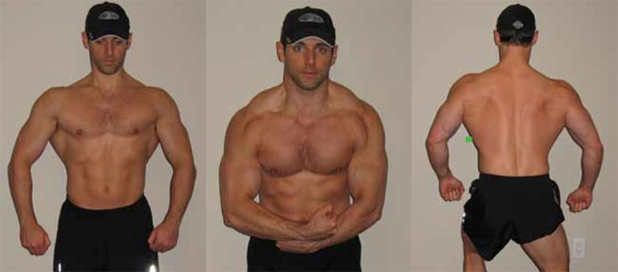
A personal introduction to my progress so far: 
  • 4 months of consistent weight training and cardio twice a week. 
  • The last two months I practiced IF. I did not go every single day in the beginning reaching my goal of a 16hr fast each day but my body slowly adapted. I did not fret about these days. Improvement each day was the goal.
  • Strength has progressively increased during this 6 month period. IF has not affected my strength gains adversely in the slightest.
Feb 24th, 2012 *I had actually been working out for two and a half weeks prior to this photo.
186lbs @ Body Fat 15.8% (as tested by Bod Pod)


May 16th, 2012
183lbs @ Body Fat 13.8% (as tested by Bod Pod)
 The lighting here really played a role in how this photo came out. I still was very soft. Lower abs were holding fat and love handles/lower back fat wouldn't budge.


July 28th, 2012

172lbs @ Body Fat 10.2%